
The Author of Long Snappers Blues explains his exploration into writing a novel
Mike Tanier is an experienced football analyst and writer, and frankly one of the best around. He is a former teacher, and author of the entertaining Long Snappers Blues. Mike delivers expert statistical breakdowns, usually wrapped heavily in a hoagie roll of pop culture and sarcasm. His Substack is as educational as it is hilarious. Readers will come away sore from laughing, yet smarter without realizing it.
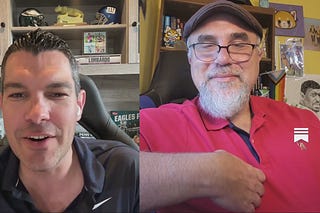
He was kind enough to sit down and discuss football, writing the book, and providing advice for aspiring sportswriters.
nK: Welcome, Mike! It’s great to connect with you. Congrats on the book. It’s such a fun read. When did you decide that a novel, especially this type of story, was a project that you wanted to take on?
MT: I started and stopped Long Snappers Blues several times throughout the 2010s. By late in the decade, my sons were in their teens and tweens, so my responsibilities as a dad did not take up as much of my free time. Bleacher Report also didn’t ask much of me from the NFL draft through the start of training camp, giving me three or four days per week when I could focus on an independent writing project. So, it’s not so much that I decided on a novel, but that I actually got past page 20 of a novel for once.
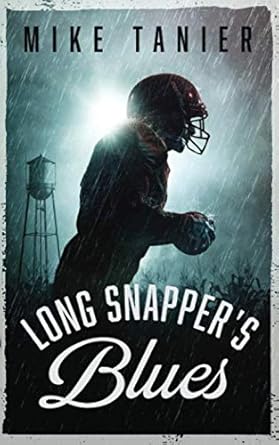
nK: I admit that I am not well versed in sports entertainment in the form of scripted stories. I never watched Friday Night Lights, and I know the highlights from Remember the Titans, but that’s pretty much it. What was it about the high school stage of the sport that appealed to you?
MT: The old adage says to “write what you know.” I know high school from years of teaching. I know football. By the late 2010s, I knew teenagers pretty well, as a parent.
You are right: high school football is well-worn territory. Not just the movies you mentioned: It’s common for any American high school coming-of-age drama or comedy to have a football element. Fast Times at Ridgemont High has a football segment. Dazed and Confused is about the football team, even though it’s not football season.
When I started imagining Long Snappers Blues in the late 2000s, it was going to be about the problems the “cool, popular kids” in a school face. The quickest way to signal kids are cool and popular is to put them on the football and cheerleading teams. Then the “Big Game” becomes an obvious source of drama and conflict.

nK: Were any of the characters based on individuals from your past, or students who you taught?
MT: Just about everyone was an amalgam of several students I taught, sometimes mixed with kids I knew in high school or college. Same with the adults and teachers in the story.
Teaching introduces you to about 100 new kids per year. Teach for years and you might end up meeting 20 high school quarterbacks, dozens of “most popular girls in the school,” learn how many variations there are of “geeky geniuses” or “wrong side of the tracks” or whatever stereotype you like are out there, and how they change over the years. So if I sit down to write, say, the Valedictorian, I can grab character traits from many different people.
I also grabbed character traits and tics from Eleanor from The Good Place, the Sweathogs from Welcome Back Kotter and elsewhere.
nK: Chase was so easy to pull for. He’s got so many pitfalls that can keep him stuck in Copper Creek forever, and even project him as the future “Class of 88.” Two questions about him. 1. Did you have him pretty fleshed out when you started, and 2. Did he surprise you while you were writing with his choices or actions?
MT: Chase started out, unsurprisingly, as a self-insert character: the smart-aleck intellectual who loves football. He only really became fleshed out, however, as I watched my son and his friends navigate teenage misadventures: dating, parties.
One problem I had with Chase was motivating him when he started making bad decisions. He was too much of a too-smart-for-the-room Mary Sue early on. I finally landed on: he’s doing these things because he is 17, bored, a little disillusioned and horny. That’s all the motivation many bright young folks need to do some really stupid stuff.
nK: One thing I loved that just kept surprising me was your ability to give every character depth. No one was the caricature they may have seemed at first glance. That’s not to say everyone gets a happy ending, but everyone has motivations, influences, incentives, and independence. Did you write them with the intention of making sure no one was just a stereotype?
MT: I almost shelved the story many times because the two love interests were too much of a “Madonna and Whore” cliche. It’s a standard pitfall for a dude writing women, through the eyes of a male protagonist/narrator. To offset this, I gave the “good girl” a distinct speech style while sharpening her somewhat elitist attitude, then made the “bad girl” snappier and more inclusive/accepting. Also made Chase see them more clearly as the story goes on: he’s growing up and whatnot. His girlfriend is literally on a pedestal when we first meet her, while Autumn’s figure enters the frame before she does. And then we meet these “objects” and (I hope) discover they are people with their own lives outside of our protagonist’s tale.
Overall, one of my big themes/goals was to take the jocks and It girls who are often one-note antagonists in coming-of-age comedies/dramas and show all the problems/conflicts/obstacles they deal with. So right off the bat, I had to subvert or flesh out some stereotypes.

nK: It’s been a couple of years, but any plans for a follow-up? I feel like Chase’s college years have plenty of untapped potential. Part of me really needs to root for the Virginia College of the Tides. I would donate to a Kickstarter for a Sea Dragons jersey!
MT: No follow up! In my head, Long Snappers Blues took place in the autumn of 2019. So spring brought the COVID shutdown. Our heroes got stuck in quarantine, then became politically active during the 2020 protests. Not a fun story!
I have been toying with a story of a young teacher that’s a cross between Stand and Deliver and The Producers for many years. It’s set in a school and town similar to the one in Long Snappers Blues. If I ever get it done, it will have some “spiritual sequel” properties.
nK: Do you have any advice for aspiring writers who want to become analysts, play-by-play folks, color commentators or any other related roles in 2025?
MT: Do everything you can to NOT be replaceable by AI. Entry-level jobs in the sports media – and there are not many of them – demand that young writers sound like robots, repeating keywords and form-fitting content to meet the demands of search engines. The same thing is happening in podcasting. Do what you have to do to make money, but don’t become a cog in the machine, because cogs are cheap and replaceable. Cultivate your own voice and ideas.
nK: Last question from me. Imagine the NFL in 5 or 10 years. Do you see this as a fully international sport? Do you picture expansion teams? Do you envision more female owners, referees, scouts…what about coaches or players?
MT: I feel like folks have been expecting the Jaguars to move to London next year for the past 15 years. I don’t think the economics of an international NFL work out, starting with basics like the sweetheart arrangements NFL teams get from municipalities when it comes to stadium building.
We are seeing more female owners as women like Carlie Irsay-Gordon inherit teams; in past generations an oldest daughter might have been passed over in succession for an NFL franchise (inheriting the “other” half of a father’s empire, perhaps). I don’t anticipate seeing female players in the NFL. They will also slam their heads into glass ceilings for a long time. Strength-and-conditioning is a place where I can envision more “football operations” power for women: players/coaches/GMs may be more likely to take fitness instructions from a woman than they would be to accept a woman installing a defense.
nK: Thank you for your time. I love your Substack and continue to subscribe and read every chance I get. What else is on the horizon for you? Where can our readers find and follow you?
MT: Readers can find me at the Too Deep Zone. They can also find me in the annual FTN Football Almanac, which comes out each July; I usually write multiple chapters.
I’m focused almost exclusively on the Too Deep Zone right now, with no long-term projects on any sort of timetable. The NFL’s weekly soap opera demands and deserves my undivided attention for much of the year.
nK: Thanks, Mike!
Grab your copy of Long Snappers Blues today and subscribe to Mike’s Too Deep Zone. You’ll enjoy the content, the voice, and you’ll walk away knowing more about football than that annoying clown at the end of your favorite sports bar!