
The Ten Most Fashionable Vampires in Cinematic History
Vampires have clawed and swept their way into the hearts of millions, encompassing fright, seduction, curiosity and fascination for hundreds of years. In the past century, vampires have changed from pale, frightening bloodsucking beasts to sexy figures in leather and velvet that never age, never wither and never tire of their nightly seduction of the innocent. Thanks to authors like Stephenie Meyer and Heather Brewer, vampires now inhabit middle and high schools, suffering through the slings and arrows of the public education system.
In celebration of vampires’ impact on fashion and fascination, let’s take a look at the top ten most glamorous vampires who have graced the big screen in the last hundred years. (Listings follow the following nomenclature: Character (Actor/Film)
Ten – Deacon Frost (Stephen Dorff/”Blade” (1998))
Half-human. Half-vampire. Total Billy Bad Ass. That was Wesley Snipes’ titular character from the Blade franchise, one of many born from the pens of Marvel Studios. Blade didn’t talk much. His expertise was shooting, stabbing, punching, kicking and all sorts of violent goodies. Countering Blade’s raw physicality was the cunning Deacon Frost. Actor Stephen Dorff imbued Frost with a “cooler than you” demeanor, sporting the European goth fashion that has become synonymous with vampires (more on that later). His neatly-trimmed hair and hint of five-o-clock shadow let him walk the edge between boy and man and has been sought by lead singers in emo bands for generations. Frost’s look was just effeminate enough that guys could man-crush on him and still feel straight (sort of).
Nine – Rosalie Hale (Nikki Reed/ “Twilight (2008))
How bout a great looking blonde who can cook? Teen angst aside, let’s take the girl who could grace the cover of Elle magazine (or Hell magazine, in this case). Twilight is loaded with vampires from hippie do-gooder to happy housewife, but none boast the good looks and temperament of Rosalie. Actress Nikki Reed played up the jealous, entitled, snobby bitch angle but took her work seriously, even learning to play baseball left-handed for one of the film’s signature scenes. Granted, Rosalie doesn’t have the greatest impact in Twilight, but she’s stylish from her blonde bangs to her rhinestone heels.
Eight – Princess Asa Vajda (Barbara Steele/ “Black Sunday” (aka “La maschera del demonio” (1960))
Scream queen Barbara Steele graced the silver screen in horror films for decades. Arguably her most notable performance was in Mario Bava’s directorial debut, “La maschera del demonio”. Steele played the double princesses, Asa and Katia. At 21, Steele was a knockout, with her dark hair and big, brown eyes. This film granted her the chance to play the vengeance-seeking 17th century undead beast and the innocent lass at the mercy of the supernatural curse. Steele launched her long career with this memorable horror masterpiece, becoming one of the most recognized female leads in the genre for over a decade. “Black Sunday” gets the vote over her other work due to the dichotomy of her expressions (one of several films to get two Barbaras for the acting credit of one) and the hypnotizing stare of her captivating eyes.

Seven – Count Graf Orlok (Max Schreck/”Nosferatu, eine Symphonie des Grauens” (1922))
Over eighty years since the release of “Nosferatu”, the silent film still holds a special place in the hearts of vampire fans. The title has carried on as a clan in the White Wolf game, Vampire: The Masquerade and actor Max Schreck’s unusual physical characteristics have created an offshoot stereotype amongst vampire lore. Unlike the dolled-up and dapper heart throbs, Schreck’s Count Orlok is the more inhuman side of vampires, tapping just slightly into the paranoia that caused people to invent the vampire myth centuries ago to explain brutal murders. Schreck’s odd behavior on the set was itself made into “Shadow of the Vampire” in 2000, depicting the difficult relationship between the actor and perfectionist director F.W. Murnau. Long before Kojak, Michael Jordan, Billy Zane or G.I. Jane, Schreck was showing audiences the appeal of the clean-shaven melon. The guy should be getting royalties from anyone claiming a shaved head as their signature look.
Six – Santanico Pandemonium (Salma Hayek/ “From Dusk Till Dawn” (1996))
“The mistress of the macabre, the epitome of evil, the most sinister woman to crawl on the face of the Earth.” That’s the introduction given before actress Salma Hayek takes the stage in one of the most memorable dance numbers in all of vampire history. Hayek (who had no choreographer – yes, those are all her moves on instinct alone) embodies sex before going long in the tooth and thirsting for blood on the stage of the Titty Twister. Writhing along to the sounds of Tito & Tarantula, Santanico Pandemonium (named for a 1975 Mexican horror flick) makes mouths water and pants tight. A bikini, feathered headdress and albino Burmese python are far from traditional accessories, but the combination never came together better than on Hayek’s hot flesh.
Five – Charlotte (Alyssa Milano/ “Embrace of the Vampire” (1995))
When an actress seeks to shed the stereotype of child star, one way to do so is to go for a softcore thriller with an accent on skin, usually at the cost of story. Alyssa Milano kicked her kid label to the curb with her role as Charlotte in “Embrace of the Vampire.” Technically, Charlotte isn’t a vampire in the film, but her innocence and flawless form are the target of lust for man, woman and vampire alike. Milano balanced between fright and curiosity perfectly, including several sensual scenes orchestrated with the woman’s touch of director Anne Goursaud. Oversized, white sheer blouses, red lace bras and thigh high stockings put Charlotte right at the fetish crossroad between vampires and school girls.
Four – David (Kiefer Sutherland/ “The Lost Boys” (1987))
The post-apocalyptic tough guy has been a staple of action cinema for the last thirty years. From Don Johnson in “A Boy and His Dog” to Mel Gibson in the Mad Max series, audiences have been sucked in to the adventures of grizzled tough guys. This style hit the height of sexy with Kiefer Sutherland’s confident David in “The Lost Boys.” Only 18 at the start of shooting, Kiefer channeled the California cockiness as the alpha male of the vampire pack. David covered himself in leathers, including trench coat and gloves (partially out of the need to cover a cast worn during filming). He sped recklessly on a motorcycle (hence the cast) and toyed with his victims the way a cat toys with a wounded mouse. David was the undead James Dean, cool without effort and always a breath from unleashing the heartless killer.

Three – Lestat de Lioncourt (Tom Cruise/ “Interview with a Vampire” (1994), Stuart Townsend/ “Queen of the Damned” (2002))
The rock icon, sex symbol, target of hatred, jealousy and envy all around, Lestat was born from the pen of author Anne Rice in her work, “Interview with a Vampire.” When the film inevitably found its way to the big screen, A-list actor Tom Cruise filled the shoes of the most recognizable vampire in modern history. Cruise took special interest in the project, delighting in the glamorous role even though Lestat is largely portrayed as a villain in the first novel (and corresponding film). Cruise’s Lestat brandished centuries of fashion, including top hats, canes, high-collared coats and scarves of 19th century Europe, shoulder length blonde hair and a sophistication that kept him above his consort, Louis. Cruise’s personal flair was the human reflection of the city of New Orleans; hundreds of years of crime, celebration and mystery.
Stuart Townsend portrayed Lestat in the adaptation of Rice’s third novel in the series, “Queen of the Damned.” Unlike Cruise, Townsend centered on the modern Lestat; the product of musical fame and a focus on material wealth. Like his perspective, Townsend’s fashion was also specialized. Instead of centuries of European flair, this Lestat was the personification of vampire stereotypes; pale, thin, framed by dark hair and addressing his prey with bedroom eyes. Townsend spent half the film shirtless, seducing audiences with his frame and leather pants; a smaller, thinner ghost of Brandon Lee’s look in 1994’s “The Crow.” Townsend breaks no new fashion ground as Lestat, but does serve well as a model for most of the Heavy Red clothing line.
Two – Selene (Kate Beckinsdale/ “Underworld” (2003))
“I am a Death Dealer, sworn to destroy those known as the Lycans. Our war has waged for centuries, unseen by human eyes. But all that is about to change.” Enter Selene, the death dealer with pale skin and leather so tight it might as well be sprayed on. Actress Kate Beckinsdale was perfectly cold as the vampire clan’s hired gun, living on the bleeding edge of a war against werewolves. Debuting in the middle of a thunderstorm, perched atop the city, oblivious to the mindless vermin below, Selene is a killer with no conscience until love finds her in the form of the human, Michael.
Beckinsdale’s natural beauty is overwhelming enough, but clad in a black leather trench coat, corset and 18 point boots, she’ll make a man forget his own name. Selene successfully transitioned vampires into goth-industrial hotness, transcending stereotypes where Townsend only furthered them. Beckinsdale’s vampire huntress ramped up the bad-ass factor of her kind, just as Dan Boyle’s infected surpassed the fright factor of zombies previous to his film, “28 Days Later.” (No offense, George Romero, but a flesh eater who can run a 4.3 second 40-yard dash is a lot scarier than the clones in the mall in “Dawn of the Dead.”)
“Underworld” boasted a solid story, great effects, quick-paced action scenes and a fresh look at the vampire war against werewolves. These factors attributed to two sequels, but without Beckinsdale’s beauty as an anchor, the franchise didn’t have the focal point that would lead to its success. Selene is the model for cinema’s new breed of killer vamp, has already been imitated and has earned her place in vampire lore.
One – Count Dracula (Bela Lugosi/ “Dracula” (1931), Gary Oldman/ “Bram Stoker’s Dracula” (1992), Other Adaptations)
There is only one Lord of the Dead. There is only one prince of darkness. It is not Vincent Price and it damn sure isn’t Ozzy Osbourne. The title belongs to the most famous name in vampire lore in the past hundred years; Vlad Tepes, the impaler, most famous Transylvanian ever…Count Dracula. Brought to the life in 1897 by author Bram Stoker, the count has become infamous in cinema. His story has been filmed, adapted and re-told countless times. The count has appeared in film, TV, cartoons, comics, print and art. At this stage, it’s nearly impossible to know the word vampire without knowing the name Dracula.
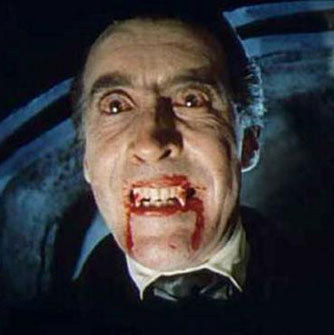
Bela Lugosi, master of over a hundred films, is most closely identified with his on-screen personification of the legendary vampire. Lugosi’s take on the Count established nearly every vampire stereotype of the 20th century. Pale skin. Velvet vest. Tight collar. Long, flowing cape. Fangs. Hypnotic stare. These traits, now completely synonymous with all things vampire, all resulted from Lugosi, Stoker and director Tod Browning. Dracula has since been refined, re-defined, recreated and imitated (see 1972’s “Blacula” or 1995’s “Dracula: Dead and Loving It”).
Coveted actor Gary Oldman reprised Lugosi’s role in 1992 as the titular character. Under the instruction of famed director Francis Ford Coppola, Oldman became the count, with a demeanor that hinted of preternatural knowledge. He boasted the mix of top hat, cane and cloak (and wicked shades) but also adapted the traditional hair and self-incriminating isolation of a monster whose existence is eternally haunted by the ghosts of loneliness.
There has never been a vampire more important to the history, recognition or relevance of vampires than the count himself. He is the Alpha and Omega of vampires. Everything since the creation of Dracula is just an addition or alteration to vampire lore. The count was, is and always will remain the great untouchable of the undead.
I loved this the first time I read it. And, honestly, I haven’t seen ALL of these (two of them if we’re counting), but the ones I have seen, I completely agree with.